 Zhejiang Rsafele Electric Co., Ltd.

A
Above grade:
A term referring to an equipment use location above the high water line not intended for partial or total submersion.
Axial force:
A force applied along the axis of the pry bar from its handle to its pry tip.
Apparent charge (terminal charge):
A charge that, if it could be injected instantaneously between the terminals of the test object, would momentarily change the voltage between its terminals by the same amount as the partial discharge (PD) itself. The apparent charge should not be confused with the charge transferred across the discharging cavity in the dielectric medium.
Aging cycle:
A measure of the time spent at a target temperature for the purpose of accelerated aging of insulation.
Ambient sound pressure level:
The sound pressure level measured at the test facility or at the substation without the transformer energized.
A-weighted sound level:
Loudness that is measured with a sound level meter using the A-weighted response filter that is built into the meter circuitry. The A-weighting filter is commonly used to measure community noise, and it simulates the frequency response of the human ear.
Average winding temperature rise:
The arithmetic difference between the average winding temperature and the ambient temperature as determined from the change in the ohmic resistance measured across the terminals of the winding in accordance with the test procedures specified in IEEE Std C57.12.91™.
AA:
The cooling class for a dry-type self-cooled transformer or reactor that is cooled by the natural circulation of air. Syn: AN (IEC 50) 3,4.
AA/FA:
The cooling class for a dry-type transformer that has a self-cooled rating with cooling obtained by the natural circulation of air and a forced-air-cooled rating with cooling obtained by the forced circulation of air. Syn: AN/AF (IEC 50).
Accessible:
Admitting close approach because not guarded by locked doors, elevation, or other effective means.
Accessories:
Devices that perform a secondary or minor duty as an adjunct or refinement to the primary or major duty of a unit of equipment.
Additive:
A chemical compound or compounds added to an insulating fluid for the purpose of imparting new properties or altering those properties that the fluid already has.
AFA:
The cooling class for a dry-type forced-air-cooled transformer that derives its cooling by the forced circulation of air. Syn: AF (IEC 50).
alternating current: A periodic current the average value of which over a period is zero. NOTE-Unless distinctly specified otherwise, the term alternating current refers to a current that reverses at regularly recurring intervals of time and that has alternately positive and negative values.
Alternating-current saturable reactor:
A reactor whose impedance varies cyclically with the alternating current (or voltage).
Alternating-current winding of a rectifier transformer:
The primary winding that is connected to the alternating-current circuit and usually has no conductive connection with the main electrodes of the rectifier.
Ambient sound pressure level:
The sound pressure level measured at the test facility or at the substation without the transformer energized.
Ambient temperature:
The temperature of the medium such as air, water, or earth into which the heat of the equipment is dissipated.
Ampacity:
Current-carrying capacity expressed in amperes, of a wire or cable under stated thermal conditions.
Angular displacement of a polyphase transformer:
The phase angle expressed in degrees between the line-to-neutral voltage of the reference identified high-voltage terminal and the line-to-neutral voltage of the corresponding identified low-voltage terminal.
Anode paralleling reactor:
A reactor used with rectifiers with a set of mutually coupled windings connected to anodes operating in parallel from the same transformer terminal.
ANV:
The cooling class for a dry-type nonventilated self-cooled transformer, which is so constructed as to provide no intentional circulation of external air through the transformer, and that operates at zero gauge pressure. Syn: ANAN (IEC 50).
Apparatus:
A general designation for large electrical equipment such as generators, motors, transformers, circuit breakers, etc.
Apparent charge:
A charge that, if it could be injected instantaneously between the terminals of a test object, would momentarily change the voltage between its terminals by the same amount as the partial discharge itself. It is expressed in coulombs and abbreviated as C. One pC is equal to 10–12 C.
Applied voltage tests:
Dielectric tests in which the test voltages are low-frequency alternating voltages from an external source applied between conducting parts and ground without exciting the core of the transformer being tested. See also: induced voltage tests, low-frequency dielectric tests.
Arcing switch [in an load tap changer (LTC)]:
A switching device used in conjunction with a tap selector to carry, make, and break currents in circuits that have already been selected. See also: diverter switch (IEC 50).
Arcing tap switch (in an LTC):
A switching device capable of carrying current and also breaking and making current while selecting a tap position. It, thereby, combines the duties of an arcing switch and a tap selector. See also: selector switch (IEC 50).
Articulated unit substation:
A unit substation in which the incoming, transforming, and outgoing sections are manufactured as one or more subassemblies intended for connection in the field.
Askarel:
A generic term for a group of synthetic, fire-resistant, chlorinated, aromatic hydrocarbons used as electrical insulating liquids. They have a property under arcing conditions such that any gases produced will consist predominantly of noncombustible hydrogen chloride with lesser amounts of combustible gases.
Autotransformer:
A transformer in which at least two windings have a common section.
Average winding rise:
See: average winding temperature rise.
Average winding temperature:
The average temperature of a winding as determined from the ohmic resistance measured across the terminals of the winding in accordance with the cooling curve procedure specified in IEEE Std C57.12.90.
Average winding temperature rise:
The arithmetic difference between the average winding temperature of a winding and the ambient temperature.
Average winding temperature rise of a transformer:
The arithmetic difference between the average winding temperature of the hottest winding and the ambient temperature.
A-weighted sound level:
Loudness that is measured with a sound-level meter using the A-weighted response filter that is built into the meter circuitry. The A-weighting filter is commonly used to measure community noise, and it simulates the frequency response of the human ear.
B
Back-up protection:
Devices external to the transformer enclosure to limit the duration or the potential duration of flow of current.
Back-feed:
Operation of a unit transformer (UT ) with the generator disconnected to supply start-up, auxiliary power, or testing power where low magnitude current fows in the opposite direction from normal operation of the transformer.
Bar-type current transformer:
One that has a fixed and straight single primary winding turn passing through the magnetic circuit. The primary winding and secondary winding(s) are insulated from each other and from the core(s) and are assembled as an integral structure.
Basic lightning impulse insulation level (BIL):
A specific insulation level expressed in kilovolts of the crest value of a standard lightning impulse.
Basic switching impulse insulation level (BSL):
A specific insulation level expressed in kilovolts of the crest value of a standard switching impulse.
Bottom-oil temperature:
The temperature of the liquid in a liquid-immersed transformer as measured at an elevation just below the bottom of the coils or in the oil flowing from the liquid cooling equipment into the transformer.
Bottom-oil temperature rise:
The arithmetic difference between the bottom-oil temperature and the ambient air temperature.
Burden of an instrument transformer:
That property of the circuit connected to the secondary winding that determines the active and reactive power at the secondary terminals
Bushing:
An insulating structure including a central conductor, or providing a central passage for a conductor, with provision for mounting on a barrier, conducting or otherwise, for the purpose of insulating the conductor from the barrier and conducting current from one side of the barrier to the other.
Bushing elbow:
An insulated device used to connect insulated conductors to separable insulated connectors on dead-front, pad-mounted transformers and to provide a fully insulated connection. Syn: elbow connector.
Bushing insert:
That component of a separable insulated connector that is inserted into a bushing well to complete a dead-front, load break or non-load break, separable insulated connector (bushing).
Bushing test tap:
A connection to one of the conducting layers of a capacitance graded bushing for measurement of partial discharge, power factor, and capacitance values.
bushing-type current transformer: One that has an annular core and a secondary winding insulated from and permanently assembled on the core but has no primary winding nor insulation for a primary winding. This type of current transformer is for use with a fully insulated conductor as the primary winding. A bushing-type current transformer usually is used in equipment where the primary conductor is a component part of other apparatus.
Bushing voltage tap:
A connection to one of the conducting layers of a capacitance graded bushing providing a capacitance voltage divider.
Bushing well:
A component of a separable insulated connector, either permanently welded or clamped to an enclosure wall or barrier, having a cavity that receives a replaceable component (bushing insert) to complete the separable insulated connector (bushing).
Bus reactor:
A current-limiting reactor for connection between two different buses or two sections of the same bus for the purpose of limiting and localizing the disturbance due to a fault in either bus.
C
Carbon steel:
A steel containing only residual quantities of elements other than carbon, except those added for deoxidation or to counter the deleterious effects of residual sulfur. Silicon is usually limited to about 0.60%, and manganese to about 1.65% by weight. Syn: mild steel, ordinary steel, plain carbon steel, straight carbon steel.
Conformance tests:
Certain performance tests are conducted to demonstrate compliance with the applicable standards. The test specimen is normally subjected to all planned routine tests prior to initiation of the conformance test program.
NOTE-The conformance tests may, or may not, be similar to certain design tests. Demonstration of margins (capabilities) beyond the standard requirements is unnecessary.
Conventional:
A description applied to temperature-rise limits, insulation materials or insulation systems operating at temperatures within the normal thermal limits of IEEE Std C57.12.00.
NOTE-The thermal limits for the winding are defined as 65 °C average temperature rise, 80 °C hottest spot temperature rise, and 110 °C hottest spot temperature. The thermal limits for the insulating liquid are defined as 65 °C top oil temperature rise.
Conventional insulation system:
Solid insulation materials used throughout the transformer and insulating liquid, operating at temperatures within the normal thermal limits of IEEE Std C57.12.00.
NOTE-The thermal limits for the winding are defined as 65 °C average temperature rise, 80 °C hottest spot temperature rise, and 110 °C hottest spot temperature. The thermal limits for the insulating liquid are defined as 65 °C top oil temperature rise.
Chemical compatibility test (CCT):
Sealed tube test procedure, as defined in ASTM D5642, which is designed to evaluate the chemical compatibility of all components of an insulation system.
Cold exposure:
Test specimens are exposed to cold temperatures once per aging cycle as part of the diagnostic procedures used to evaluate the thermal capability of the tested insulation system.
Correlation coefficient (R):
A measure of how well a predictive model fits the aging data from a thermal evaluation experiment.
C-weighted sound level:
Loudness that is measured with a sound level meter using the C-weighted filter that is built into the meter circuitry. C-weighting has only little dependence on frequency over the greater part of the audible frequency range.
Capacitance graded bushing:
A bushing in which metallic or nonmetallic conducting layers are arranged within the insulating material for the purpose of controlling the distribution of the electric field of the bushing, both axially and radially.
Cascade-type voltage transformer:
A voltage transformer that has an insulated-neutral or grounded neutral terminal and that has the primary winding subdivided into two or more (usually equal) series connected sections, mounted on one or more magnetic cores, and that has the secondary winding located about the core at the neutral end of the primary winding. The sections of the primary winding are coupled by "coupling windings." The cores, if more than one, are insulated from each other and connected to definite voltage levels along the primary winding.
Cast coil transformer:
A dry-type transformer in which the coils of at least one winding are cast (encapsulated) into a thermosetting resin that solidifies to become a solid, rigid, insulating system protecting the coils from contact with water, some contaminants, and damage due to casual physical contact.
Change-over selector (in an LTC):
A device designed to carry, but not to make or break current, used in conjunction with a tap selector or arcing tap switch to enable its contacts, and the connected taps, to be used more than once when moving from one extreme position to the other. This device is commonly referred to as a reversing switch. See also: change-over selector (IEC 50).
Chopped-wave lightning impulse test:
A voltage impulse that is terminated intentionally by sparkover of a gap, which occurs subsequent to the maximum crest of the impulse wave voltage, with a specified minimum crest voltage and a specified minimum time to flashover.
Circulating current (in an LTC):
The current that flows through the transition impedance as a result of two taps being bridged during a tap change operation for resistance type LTCs or being in the bridging position for reactance type LTCs. See also: circulating current (IEC 50).
Class 2 transformer:
A step-down transformer of the low-secondary-voltage type, suitable for use in Class 2 remote-control low-energy circuits. It shall be of the energy-limiting type or of a non-energy limiting type equipped with an overcurrent device. NOTE-"Low-secondary-voltage," as used here, has a value of approximately 24 V.
Class 105 insulation system:
Materials or combinations of materials, which by experience or accepted tests, have been shown to give the required life at a continuous temperature of 105 °C.
Class 130 insulation system:
Materials or combinations of materials, which by experience or accepted tests, have been shown to give the required life at a continuous temperature of 130 °C.
Class 155 insulation system:
Materials or combinations of materials, which by experience or accepted tests, have been shown to give the required life at a continuous temperature of 155 °C.
Class 180 insulation system:
Materials or combinations of materials, which by experience or accepted tests, have been shown to give the required life at a continuous temperature of 180 °C.
Class 220 insulation system:
Materials or combinations of materials, which by experience or accepted tests, have been shown to give the required life at a continuous temperature of 220 °C.
Class over-220 insulation system:
Materials or combinations of materials, which by experience or accepted tests, have been shown to give the required life at a continuous temperature at temperatures over 220 °C.
Coefficient of grounding:
The ratio EL-G/EL-L) expressed as a percentage, of the highest root-mean square (rms) line-to-ground power-frequency voltage (EL-G) on a sound phase, at a selected location, during a fault to earth affecting one or more phases to the line-to-line power-frequency voltage (EL-L) that would be obtained, at the selected location, with the fault removed.
Coil (of a transformer):
The assemblage of windings that encircle a ferromagnetic core leg (limb) for the purpose of producing or linking magnetic flux. See also: winding of a transformer.
Combustible material:
Materials that are external to the apparatus and made of or surfaced with wood, compressed paper, plant fibers, or other materials that will ignite and support flame.
Common winding of an autotransformer:
That part of the autotransformer winding that is common to both the primary and the secondary circuits.
Commutating reactor:
A reactor used with rectifiers primarily to modify the rate of current transfer between rectifying elements.
Compound-filled transformer:
A transformer in which the windings are enclosed with an insulating fluid that becomes solid, or remains slightly plastic, at normal operating temperatures.
Conformance tests:
Tests that are specifically made to demonstrate conformity with applicable standards.
Conservator:
An oil preservation system in which the oil in the main tank is isolated from the atmosphere, over the temperature range specified, by means of an auxiliary tank partly filled with oil and connected to the completely filled main tank.
Constant-current transformer:
A transformer that automatically maintains an approximately constant current in its secondary circuit under varying conditions of load impedance when supplied from an approximately constant-voltage source. See also: current regulation of a constant-current transformer; impedance voltage of a constant-current transformer; rated kilowatts of a constant-current transformer; rated primary voltage of a constant-current transformer; rated secondary current of a current transformer.
Constant-voltage transformer:
A transformer that maintains an approximately constant-voltage ratio over the range from zero to rated output.
Contactor:
A device for repeatedly establishing and interrupting an electric power circuit.
Continuous duty:
A duty that demands operation at a substantially constant load for an indefinitely long time.
Continuous rating:
The maximum constant load that can be carried continuously without exceeding established temperature-rise limitations under prescribed conditions.
Continuous thermal current rating factor (RF):
The number by which the rated primary current of a current transformer is multiplied to obtain the maximum primary current that can be carried continuously without exceeding the limiting temperature rise from 30º C average ambient air temperature. The RF of tapped-secondary or multiratio current transformers applies to the highest ratio, unless otherwise stated.
D
Design tests:
Tests made by the manufacturer to determine the adequacy of the design of a particular type, or model of equipment or its component parts to meet its assigned ratings and to operate satisfactorily under normal conditions and under special conditions if specified. These tests are used to demonstrate compliance with applicable standards of the industry.
NOTE-Design tests, sometimes called type tests, are made on representative apparatus or prototypes to verify the validity of design analysis and calculation methods and to substantiate the ratings assigned to all other apparatus of basically the same design. These tests may also be used to evaluate the modification of a previous design and to verify that performance has not been adversely affected. Test data from previous similar designs may be used for current designs, where appropriate. Once made, the tests need not be repeated unless the design is changed so as to modify performance.
Dry film thickness:
Thickness of any applied coating(s) measured after curing.
Enclosure security: The completely assembled apparatus will resist unauthorized entry when tested in accordance with the procedures of this standard
Dry-type transformer:
A transformer in which the core and coils are in a gaseous or dry compound insulating medium.
E
Enclosures:
The complete transformer housing, tank, cover, band, etc., that contains the liquid, the core and coil, the accessories, etc., of an overhead-type distribution transformer.
Efficiency (of a transformer):
The ratio of the useful power output of a transformer to the total power input.
Electrical stress path:
Dielectric failure paths in the representative small-scale model coils representing turn to-turn, layer-to-layer, disk-to-disk, section-to-section, winding-to-winding, and winding-to-ground.
Enhanced sealed tube (EST) evaluation:
A sealed tube test procedure that is conducted under enhanced conditions (higher temperature, longer time) and with more detailed evaluations versus the chemical compatibility test (CCT) procedure.
F
Full hybrid insulation winding:
A winding composed of conventional solid insulation with high temperature solid insulation used in areas in contact with the winding conductor to allow higher than conventional average winding and hottest spot temperature rises.
Full-size transformer coils:
Full-size transformer coils capable of meeting the requirements of IEEE Std C57.12.01 and passing testing per IEEE Std C57.12.91, which are selected for use as test objects in this procedure.
G
Gel coat:
The material that provides the inhibition for ultraviolet protection and color to the fiber reinforced plastic (FRP).
Guard:
One or more conducting elements arranged and connected on an electrical instrument or measuring circuit to divert unwanted currents from the measuring means.
Generator (rotating machinery):
A machine that converts mechanical power into electrical power.
H
High-temperature:
A description applied to temperature-rise limits, insulation materials or insulation systems operating at higher temperatures than conventional.
High-temperature insulation system:
High-temperature insulation used throughout the transformer, except for some minor insulation components in lower temperature areas, together with high-temperature insulating liquid operating at higher than conventional top liquid, average winding and hottest spot temperature rises.
High-temperature insulation winding:
A winding composed of high-temperature insulation used throughout the winding to allow higher than conventional average winding and hottest spot temperature rises.
Hybrid insulation system:
High-temperature solid insulation operating above conventional temperatures, combined with conventional solid insulation and an insulating liquid operating at conventional temperatures.
Humidity conditioning:
Humidification of the test coils as part of the diagnostic procedures used to evaluate the thermal capability of the testing insulation system.
Hot-spot:
A non-recommended abbreviated term frequently used as a synonym for the maximum, or hottest-spot, temperature rise of a winding.
I
Internal fusible element:
An expulsion fuse that operates in the transformer liquid.
Distribution substation transformer: A distribution transformer designed for installation in a station or substation.
liquid:
Both less-flammable liquids and mineral transformer oil.
Instrumented control coil:
A coil used that is of the same coil design, including all materials, as the full-size transformer coils used in the circulating current evaluation method that is imbedded with sufficient thermal sensors to accurately determine the hottest spot of the winding during the aging process. This instrumented control coil shall experience the same current as the full-size transformer coils but is not to be subjected to dielectric testing, cold exposure, or humidity conditioning. If the coil is in good operating condition, it may be used for multiple aging temperatures or test programs as long as it is the same coil design.
Insulation system:
An assembly of insulating materials in a particular type, and sometimes size, of equipment. In most cases, this combination of insulating materials is also known as an electrical insulation system (EIS).
K
KDAF:
The cooling class for a transformer having its core and coils immersed in insulating fluid with fire point greater than 300 ºC and cooled by forced circulation of the insulating fluid utilizing directed flow. The insulating fluid is cooled by external insulating fluid-to-air heat-exchanger equipment utilizing forced circulation of air over its cooling surface. See also: directed flow.
KDAF:
The cooling class for a transformer having its core and coils immersed in insulating fluid with fire point greater than 300 ºC and cooled by forced circulation of the insulating fluid utilizing directed flow. The insulating fluid is cooled by external insulating fluid-to-air heat-exchanger equipment utilizing forced circulation of air over its cooling surface. See also: directed flow.
KFAF:
The cooling class for a transformer having its core and coils immersed in insulating fluid with fire point greater than 300 ºC and cooled by forced circulation of the insulating fluid utilizing non directed flow. The insulating fluid is cooled by external insulating fluid-to-air heat-exchanger equipment utilizing forced circulation of air over its cooling surface. See also: non-directed flow.
KFWF:
The cooling class for a transformer having its core and coils immersed in insulating fluid with fire point greater than 300 ºC and cooled by forced circulation of the insulating fluid utilizing non directed flow. The insulating fluid is cooled by external insulating fluid-to-water heat-exchanger equipment utilizing forced circulation of water over its cooling surface. See also: non-directed flow.
KFWF:
The cooling class for a transformer having its core and coils immersed in insulating fluid with fire point greater than 300 ºC and cooled by forced circulation of the insulating fluid utilizing non directed flow. The insulating fluid is cooled by external insulating fluid-to-water heat-exchanger equipment utilizing forced circulation of water over its cooling surface. See also: non-directed flow.
KNAN:
The cooling class for a transformer or reactor having its core and coils immersed in insulating fluid with fire point greater than 300 ºC, the cooling being effected by the natural circulation of air over the cooling surface.
KNAN/KFAF/KFAF:
The cooling class for a transformer having its core and coils immersed in insulating fluid with fire point greater than 300 ºC and having a self-cooled rating with cooling obtained by the natural circulation of air over the cooling surface, and two forced insulating fluid-cooled ratings obtained by forced circulation of the insulating fluid over the core and coils, utilizing non-directed flow. See also: non-directed flow.
KNAN/KNAF:
The cooling class for a transformer having its core and coils immersed in insulating fluid with fire point greater than 300 ºC and having a self-cooled rating with cooling obtained by the natural circulation of air over the cooling surface, and a forced-air-cooled rating with cooling obtained by the forced circulation of air over this same cooling surface.
KNAN/KNAF/KFAF:
The cooling class for a transformer having its core and coils immersed in insulating fluid with fire point greater than 300 ºC and having a self-cooled rating with cooling obtained by the natural circulation of air over the cooling surface, a forced-air-cooled rating with cooling obtained by the forced circulation of air over this same cooling surface, and a forced insulating fluid-cooled rating with cooling obtained by the forced circulation of the insulating fluid over the core and coils utilizing non directed flow. The insulating fluid is cooled by the same cooling surface over which the air is being forced circulated. See also: non-directed flow.
KNAN/KNAF/KNAF:
The cooling class for a transformer having its core and coils immersed in insulating fluid with fire point greater than 300 ºC and having a self-cooled rating obtained by the natural circulation of air over the cooling surface, a forced-air-cooled rating obtained by the forced circulation of air over a portion of the cooling surface, and an increased forced-air-cooled rating obtained by the increased forced circulation of air over a portion of the cooling surface.
Knockout:
A portion of the wall of a box or cabinet so fashioned that it may be readily removed by a hammer, screwdriver, and pliers at the time of installation in order to provide a hole for the attachment of a raceway cable or fitting.
KNWF:
The cooling class for a transformer having its core and coils immersed in insulating fluid with fire point greater than 300 ºC, the cooling being effected by the natural circulation of the insulating fluid over a water-cooled surface.
KNWF/KNAN:
The cooling class for a transformer having its core and coils immersed in insulating fluid with fire point greater than 300 ºC and having a water-cooled rating with cooling obtained by the natural circulation of the insulating fluid over the water-cooled surface, and a self-cooled rating with cooling obtained by the natural circulation of air over the cooling surface.
KVA or volt-ampere short-circuit input rating of a high-reactance transformer:
One that designates the input kVA or volt-amperes at rated primary voltage with the secondary terminals short circuited.
L
LDAF:
The cooling class for a transformer having its core and coils immersed in insulating liquid with no measurable fire point and cooled by forced circulation of the insulating liquid utilizing directed flow. The insulating liquid is cooled by external insulating liquid-to-air heat-exchanger equipment utilizing forced circulation of air over its cooling surface. See also: directed flow.
LDWF:
The cooling class for a transformer having its core and coils immersed in insulating liquid with no measurable fire point and cooled by forced circulation of the insulating liquid utilizing directed flow. The insulating liquid is cooled by external insulating liquid-to-water heat-exchanger equipment utilizing forced circulation of water over its cooling surface. See also: directed flow.
Lead:
A conductor that connects a winding to its termination (that is, terminal, bushing, terminal board, or connection to another winding).
M
Mixed hybrid insulation winding:
A winding composed of conventional solid insulation with high temperature solid insulation used only selectively to allow higher than conventional hottest spot temperatures, while operating at conventional average winding temperature rises.
Maximum (hottest-spot) winding temperature:
The maximum or hottest temperature of the current carrying components of a transformer winding in contact with insulation or insulating fluid. The hottest spot temperature is a naturally occurring phenomenon due to the generation of losses and the heat transfer phenomena. It is the highest temperature inside the transformer winding and is greater than the measured average winding temperature of the coil conductors. All transformers have a maximum (hottest-spot) winding temperature.
NOTE-In this guide, the hottest-spot rise is not considered to be due to localized manufacturing defects.
Maximum (hottest-spot) winding temperature rise:
The arithmetic difference between maximum (hottest-spot) winding temperature and the ambient temperature.
N
Non-ventilated dry-type transformer:
A dry-type transformer that is so constructed as to provide no intentional circulation of external air through the transformer and operating at zero gauge pressure.
O
On-load tap changer (OLTC):
A selector switch device, which may include current interrupting contactors, used to change transformer taps with the transformer energized and carrying full load.
P
Pad-mounted enclosure:
An enclosure containing electrical apparatus, typically located outdoors at ground level where the general public has direct contact with the exterior surfaces of the equipment. The general construction of this equipment shall be such that authorized personnel may obtain access to the apparatus inside the equipment compartment(s).
Padlock:
A locking device specified and supplied by the user that will prevent the disengagement of the pentahead device (e.g., key or combination lock, one time or twist lock, single use lock or similar device).
Prying leverage:
A force at right angles to the handle times the distance from this force to the point of insertion of the pry tip into a joint, crevice, or similar opening in enclosure.
Product standard:
An industry product manufacturing or performance specification.
Partial discharge (PD):
An electric discharge that only partially bridges the insulation between conductors, and which may or may not occur adjacent to a conductor.
NOTE-PD events may ignite in gaseous dielectrics due to a localized electrical field enhancement. Generally, PDs are caused by dielectric imperfections, such as gaseous inclusions in solid and liquid dielectrics as well as protrusions on electrodes in ambient air.
Prototype transformer:
A transformer manufactured primarily to obtain engineering data or evaluate manufacturing or design feasibility. Prototypes may be pre-production units or units typical of current designs manufactured for test purposes to obtain data to comply with changes in industry standards or for other reasons.
R
Routine tests:
Tests made for quality control by the manufacturer on every device or representative samples, or on parts or materials as required to verify during production that the product meets the design specifications and applicable standards.
NOTE 1-Certain quality assurance tests on identified critical parts of repetitive high-production devices may be tested on a planned statistical sampling basis.
NOTE 2-Routine tests are sometimes called production tests.
Reference temperature:
The standard temperature to which calculations and measurement are referred shall be defined as 20 °C plus the base rated average winding rise. For multiple winding transformers that have more than one base rated average winding rise, the highest average winding rise shall be used to determine the reference temperature.
Reference temperature for no-load losses:
The no-load losses of power and distribution transformers shall be determined based on a reference temperature at 20 °C.
Representative small-scale model coils:
Model coils that represent the insulation components used in the tested insulation system and allow for sequential testing of the appropriate electrical stress paths required within the model.
S
Safety factor:
The ratio of the ultimate stress of the material used in the lifting, moving, and jacking provisions to the working stress.
Safety factor:
The ratio of the ultimate stress of the material used in the lifting provisions to the working stress.
Sealed-tank construction:
Sealed-tank construction is that construction in which the interior of the tank is sealed from the atmosphere and in which the gas volume plus the oil volume remains constant. ultimate stress: The ultimate stress is the maximum stress that a material can withstand while being stretched or pulled before it fails or breaks.
Substrate:
The material that provides structural integrity to the enclosure.
Station service transformer (SST):
A transformer that supplies power from a station high-voltage bus to the station auxiliaries and also to the unit auxiliaries during unit startup and shutdown or when the unit auxiliary transformer is not available or both.
Semi-reverberant facility:
A room with a solid floor and an undetermined amount of sound-absorbing materials on the walls and ceiling.
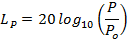
Sound pressure level  in decibels: Twenty times the base 10 logarithm of
the ratio of the measured sound pressure ( P ) to a reference pressure (
in decibels: Twenty times the base 10 logarithm of
the ratio of the measured sound pressure ( P ) to a reference pressure (  ) of 20 µPa or
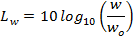
sound power level Lw in decibels: Ten times the base 10 logarithm of the emitted sound power (w) to a
reference power( )of
)of  W or
W or
Sealed transformer:
A dry-type transformer with a hermetically sealed tank.
T
Total losses:
The sum of the no-load losses and the load losses.
Test laboratory ambient conditions:
The ambient conditions of the laboratory environment where the dielectric testing is performed shall be between 10 °C and 40 °C with no limitation on humidity. The temperature and humidity during the dielectric testing should be recorded.
Thermal index:
An index that allows relative comparisons of the temperature rating of an insulation system with a defined life expectancy based on the specified test procedure.
Temperature rise:
The difference between the temperature of the part under consideration [commonly the average winding rise or the maximum (hottest-spot) winding temperature rise] and the ambient temperature.
U
Underexcitation limiter (UEL):
An electronic limiter added to excitation systems to limit the operation of generators in the underexcited region to avoid end iron heating or steady state stability limits.
Unit:
The generator or generators, associated prime mover or movers, unit auxiliary transformer and unit transformer that are normally operated together as a single source of electric power.
Unit auxiliary transformer (UAT):
A transformer intended primarily to supply all or a portion of the unit auxiliaries. Syn: unit auxiliary power transformer.
Unit transformer (UT):
A power system supply transformer that transforms all or a portion of the unit power from the unit to the power system voltage. Syn: unit power transformer, generator step-up (GSU) transformer.
V
Ventilated dry-type transformer:
A dry-type transformer that is so constructed that the ambient air may circulate through its enclosure to cool the transformer core and windings.
W
Working stress:
The maximum combined stress developed in the lifting provisions by the static load of the completely assembled transformer.
Working stress:
Working stress is the maximum combined stress developed in the lifting provisions by the static load of the completely assembled transformer.
Y
Yoke:
An element of ferromagnetic material, not surrounded by windings, used to connect the ferromagnetic legs (limbs) that the windings encircle.
Z
Zero-sequence impedance:
An impedance voltage measured between a set of primary terminals and one or more sets of secondary terminals when a single-phase voltage source is applied between the three primary terminals connected together and the primary neutral, with the secondary line terminals shorted together and connected to their neutral (if one exists).
NOTE 1- For two-winding transformers, the other winding is short-circuited. For multiwinding transformers, several tests are required, and the zero-sequence impedance characteristics are represented by an impedance network.
NOTE 2- In some transformers, the test must be made at a voltage lower than that required to circulate rated current in order to avoid magnetic core saturation or to avoid excessive current in other windings.
NOTE 3- Zero-sequence impedances are usually expressed in per unit or percent on a suitable voltage and kVA base.
Zigzag connection:
A polyphase transformer with wye connected windings, each one of which is made up of parts in which phase-displaced voltages are induced.