Zhejiang Rsafele Electric Co., Ltd.
Metallurgy: Cornerstone of Modern Industry
From infrastructure to energy transition, the metallurgical industry drives the global economy
- and transformers are its beating heart.
Global Supply Chain Pillar
Steel, aluminum, copper are essential for automotive, aerospace, construction, and renewables. With over 1.8 billion tons of crude steel produced yearly, metallurgy contributes >$2 trillion to global GDP.
Green Metallurgy Revolution
Low-carbon smelting & EAF short-process routes surge demand for high-efficiency, reliable transformers. SCOTECH helps global clients cut energy use and embrace carbon neutrality.
Transformers: The Power Heart of Metallurgical Processes
Precise voltage regulation, high-current output, and extreme-duty endurance
Core Power Conversion: Stable, High-Current Supply for Smelting
Transformers are the "heart" of metallurgical power systems. They step down high voltage (10–110 kV) to low voltage (100–1200 V) with secondary currents from thousands to millions of amperes, providing a stable, reliable, and adjustable power supply for smelting equipment.
Extreme Conditions: Strong Overload & Short-Circuit Withstand
Metallurgical loads are highly impulsive and fluctuating, especially during melting. Transformers must offer high overload capacity, excellent short-circuit withstand, and reliable operation in harsh environments (high temperature, dust, humidity) to ensure uninterrupted production.
Efficiency & Power Quality: Boosting Smelting and Grid Performance
Proper transformer configuration improves smelting efficiency, reduces harmonics, enhances power quality, and minimizes interference with other plant equipment-ensuring both safe and stable power system operation.
Low Carbon & Competitiveness: Energy-Efficient Transformers Cut Emissions
High-efficiency transformers significantly reduce energy losses and CO₂ emissions in metallurgical production. They help companies meet carbon reduction targets and environmental regulations, lower operating costs, and enhance green manufacturing image-boosting core competitiveness and sustainability.
Complete Range of Metallurgical Transformers
Tailored for every smelting process and extreme condition
- Furnace Transformer
- Rectifier Transformer
- Rolling Mill Transformer
- Power Transformer
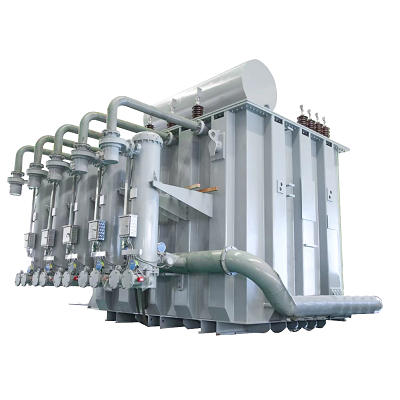
Furnace Transformer
Furnace transformers are specialized power supply units that deliver low‑voltage, high‑current electricity for electric heating metallurgical furnaces. Based on furnace type and process, they are mainly divided into five categories: Electric Arc Furnace Transformer, Ladle Furnace Transformer, Submerged Arc Furnace Transformer, Induction Furnace Transformer, and Electroslag Remelting Furnace Transformer. These are respectively applied in scrap melting, molten steel refining, ferroalloy smelting, induction melting, and high‑purity alloy remelting.
1.1 Electric Arc Furnace Transformer (EAF Transformer)
Electric Arc Furnace Transformers are the core power supply equipment for electric arc furnace steelmaking. Their primary function is to convert medium/high voltage from the grid into low voltage and extremely high current required to generate and maintain the electric arc for scrap melting. These transformers operate under extremely severe conditions, withstanding frequent overcurrents and overvoltages generated by short circuits in the furnace and the operation of HV circuit-breakers.
Main Features:
- High power ratings, typically from several MVA up to 250 MVA
- Secondary voltage generally ranges from 100V to 1,500V with wide regulation range, secondary current up to 120 kA for steel and up to 180 kA for ferroalloy
- At least 20% short-term overload capability (typically 2-hour duration) without compromising transformer life
- Multiple on-load or off-circuit tap changers for precise voltage regulation during different melting stages
- High mechanical strength and short-circuit withstand capability for current fluctuations during the melting period
- Available with built-in series reactors to improve arc stability, power factor and furnace efficiency
- Cooling options: ONAN, ONAF, OFWF (oil-forced water-forced)
Typical Applications:
- Electric arc furnace steelmaking (carbon steel, alloy steel, stainless steel)
- Ferroalloy production
- Scrap metal recycling and melting
1.2 Ladle Furnace Transformer (LF Transformer)
Ladle Furnace Transformers are specially designed power supply equipment for ladle refining furnaces (LF) in secondary steelmaking. These transformers provide stable low-voltage, high-current power to keep molten metal at the right temperature and support metallurgical reactions during the refining process. Unlike EAF transformers that endure extreme impact loads, LF transformers deliver precise, finely adjustable voltage for processes including temperature raising, composition fine-tuning, deoxidation, desulfurization, and inclusion removal.
Main Features:
- Rated capacities typically from 3,000 kVA to 80,000 kVA
- Input voltage adapts to 10kV/35kV power grids, output voltage can be finely adjusted in multiple steps (generally 100V-10kV)
- Equipped with fine on-load tap changers (≥20 steps) with output voltage deviation ≤1%
- Lower output voltage, relatively high current, stable arc with minimal current fluctuation
- Built-in harmonic suppression module and overcurrent/overvoltage protection
- Supports PLC system integration, automatically adjusting output power based on steel temperature and composition data
- Designed for 18+ years of service life
Typical Applications:
- Secondary refining of carbon steel and low-alloy steel
- Special steel refining (stainless steel, bearing steel, die steel, tool steel)
- Continuous casting line refining furnaces
- Upgrading low-alloy steel to high-strength alloy steel
1.3 Submerged Arc Furnace Transformer (SAF Transformer)
Submerged Arc Furnace Transformers are the power supply equipment for various submerged arc furnaces. They are collectively referred to as submerged arc furnace (SAF) transformers, commonly known as "mine heat furnace transformers" or "submerged arc furnaces." The working principle involves inserting electrodes into the charge layer, generating heat through arc discharge and charge resistance to smelt ores and produce alloys.
Submerged arc furnace transformers are the most widely used type of furnace transformers. The parameter and characteristics of the transformer vary depending on the smelting product. SAF transformers are suitable for ferroalloy furnaces (HT series), calcium carbide furnaces (HC series), yellow phosphorus furnaces, industrial silicon furnaces, magnesium furnaces, brown corundum furnaces, matte smelting furnaces, and many other submerged arc furnace applications.
Main Features:
- Continuous and stable load characteristics, with low impedance voltage, many tap steps, small step differences, and strong overload capacity
- Available in on-load or off-circuit tap changing types
- Generally constant capacity output for the initial taps, constant current output for the subsequent taps
- Capable of long-term overload operation of 20-40%
- Supports constant power, constant current, and constant impedance control modes
- Excellent energy-saving performance, reducing smelting power consumption by 5-10%
Typical Applications:
- Ferroalloy smelting (silicon-iron, silicon-manganese, manganese-iron, chrome-iron, etc.)
- Calcium carbide (CaC₂) production
- Yellow phosphorus production
- Industrial silicon smelting
- Magnesium and other non-ferrous metal smelting
- Brown corundum and silicon carbide production
1.4 Induction Furnace Transformer
Induction Furnace Transformers are specialized rectifier transformers designed for medium-frequency (MF) induction furnaces. In the medium-frequency induction melting process, industrial-frequency AC power must be converted into medium-frequency electrical energy (typically 150-1000 Hz) to drive the furnace induction coil to generate a magnetic field for heating metal. Induction furnace transformers serve as the "rectifier + voltage regulation" core device, providing efficient power conversion and stable output.
Main Features:
- Adopts "rectifier transformer + filtering unit" integrated structure, with built-in 6/12-pulse rectification modules and MF filtering unit
- Input adapts to 10kV/35kV grid, rated capacities from 500 kVA to 30,000 kVA
- Power conversion efficiency exceeding 98%, reducing energy consumption by 8%-12% compared to conventional equipment
- Medium-frequency voltage fluctuation ≤±2%, heating rate up to 20-30℃/min, ensuring uniform metal heating
- 12-pulse rectification significantly reduces grid harmonics (THD≤5%)
- Can withstand 3-4 times rated current impact during furnace starts/stops, failure rate ≤0.3 times/year
- Sealed anti-corrosion cabinet, protection rating IP44, suitable for high-temperature, dusty, metal splash environments in melting workshops
Typical Applications:
- Ferrous metal melting (steel, cast iron)
- Non-ferrous metal melting (aluminum, copper)
- Special alloy preparation (high-temperature alloys, wear-resistant alloys)
- Casting heat treatment (medium-frequency annealing furnaces, normalizing furnaces)
1.5 Electroslag Remelting Furnace Transformer (ESR Transformer)
Electroslag Remelting Furnace Transformers are specially designed power supply equipment for electroslag remelting (ESR) furnaces. ESR is a refining process that further purifies and solidifies steel produced by conventional smelting methods, providing high-quality ingots for demanding applications. Most electroslag remelting furnaces use single-phase power supply.
Main Features:
- No reactors are used (reactor-free design), distinguishing them from electric arc furnace designs
- Requires low no-load voltage and low impedance voltage
- Arc occurs only during the initial slag start-up stage. Once slag formation is completed, the process transitions to an essentially arc-free electroslag process that continues until melting is complete
- Low voltage with tap steps (voltage regulation stages) provided through high-voltage side switches
- Available in single-phase (HZDB series) or three-phase versions
- Oil-immersed type, rated for system voltages up to 35kV, industrial frequency 50Hz
- Voltage regulation methods: off-circuit tapping with or without excitation, or on-load tap changing
Typical Applications:
- Production of high-temperature alloys, resistance alloys, precision alloys, and certain non-ferrous metals
- Manufacturing of large high-quality alloy steel ingots, large slabs, plates, and other special shaped castings
- High-value and high-purity alloy production for critical industries
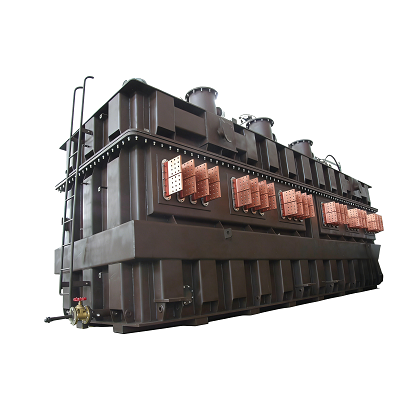
Rectifier Transformer
Rectifier transformers provide AC input power for electrolysis, electroplating, and DC drive systems. They are used together with rectifiers (thyristor or diode bridges) to convert AC into the appropriate voltage for electrolytic processes or DC motor drives. In the metallurgical industry, rectifier transformers are widely used in non‑ferrous metal extraction and DC power supply for rolling mill main drives.
Main Features:
- Secondary side often designed with multiple pulses (6‑pulse, 12‑pulse, 24‑pulse, etc.) to reduce harmonic distortion
- Phase‑shifting windings available for harmonic mitigation in high‑power rectifier systems
- Valve side voltage normally low (tens to ~1000V) but DC current extremely high
- Designed for continuous 24/7 overload operation in electrolysis plants
- On‑load tap changers available for smooth DC voltage adjustment
Typical Applications:
- Aluminum, copper, zinc electrolysis (non‑ferrous metallurgy)
- Electrochemical processes (chlor‑alkali, sodium metal, etc.)
- DC power supply for rolling mill main drives
- Underground mine DC traction power
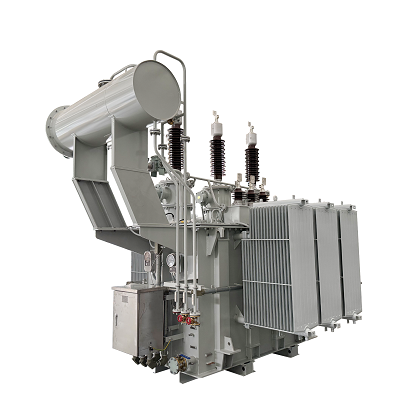
Rolling Mill Transformer
Rolling mill transformers are specially designed to supply power to the main drives and auxiliary equipment of hot rolling and cold rolling lines. Rolling processes involve periodic impact loads (e.g., a sudden current surge when the steel enters the rolls) and require high dynamic response from the power supply. Rolling mill transformers must endure frequent load fluctuations while maintaining stable output voltage to prevent product quality issues caused by speed variations.
Main Features:
- Withstand high‑frequency, high‑magnitude load impacts – excellent mechanical short‑circuit strength
- Low impedance (typically 5–8%) to provide sufficient short‑circuit current for motor starting and impact loads
- Dual‑split or multi‑winding designs to supply multiple mill stands or auxiliary equipment simultaneously
- Permits frequent overloads (e.g., 150% overload for 2 minutes)
- Compact, high‑protection design to resist water mist and iron dust in rolling mill environments
Typical Applications:
- Main drive transformers for hot strip mills, bar and wire rod mills
- Power supply transformers for cold rolling mills and foil mills
- Auxiliary rolling equipment (roll grinders, shearing lines)
- Tube and section rolling lines
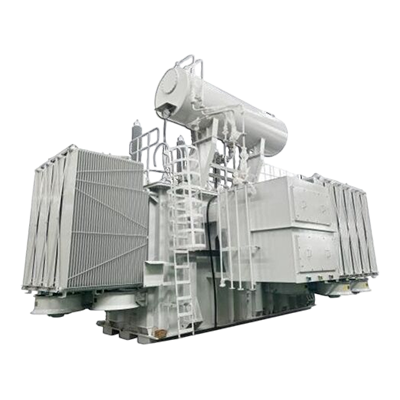
Power Transformer
Power transformers receive power from the grid and distribute it throughout the metallurgical plant. They do not directly serve the melting loads but act as the plant‑wide or workshop power hub, stepping down high voltage (e.g., 35kV, 110kV, 220kV) to medium voltage distribution levels (e.g., 10kV, 6.6kV), which is then fed to various equipment. Compared to ordinary distribution transformers, power transformers for the metallurgical industry require higher reliability, stronger overload capability, and pollution‑resistant design.
Main Features:
- Wide power range from several MVA to over 100 MVA for main step‑down substations
- On‑load tap changers (OLTC) as standard to accommodate large load swings in steel plants
- High insulation levels to withstand conductive dust and corrosive gases typical in smelting plants
- Oil‑air‑water cooling options (OFAF, OFWF) for high‑temperature and heavily polluted environments
- Compliant with IEC 61850 smart substation protocols for remote monitoring
Typical Applications:
- Main step‑down substations for steel mills and smelters
- Workshop distribution center transformers
- Step‑up / step‑down transformers for captive power plants or waste heat generation
- Public utility transformers for mines and metallurgical industrial parks
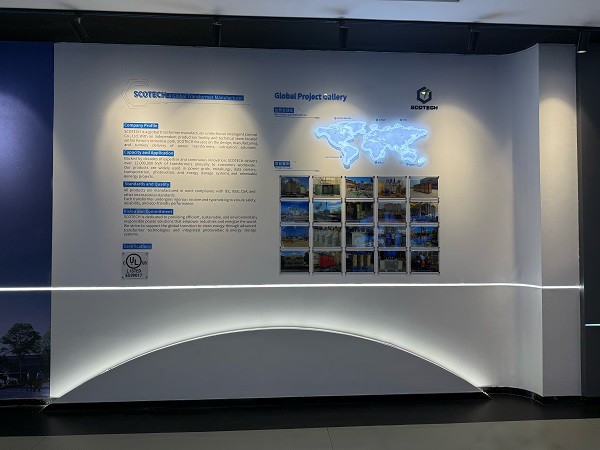
Global Success Stories · Proven Excellence
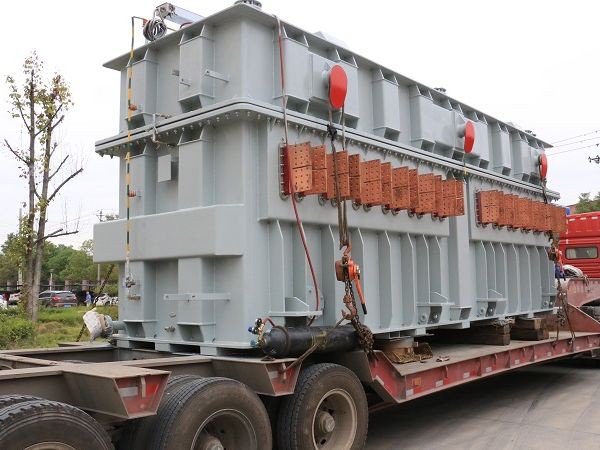
SCOTECH metallurgical transformers operate across 20+ countries on four
Why SCOTECH? Core Strengths
Global Standards & Certifications
ISO 9001, IEC 60076, CSA, CE, GOST - compliant worldwide grid access.
Superior Energy Efficiency
Amorphous / high-grade core steel - 10-15% lower losses than IE1, boosting ESG goals.
Deep Customization
Full non-standard design based on smelting curve, grid conditions, altitude & temperature; 3D simulation.
Lifecycle Support
Technical consulting, site supervision, rewinding, online monitoring - one-stop service.
Fast Lead Time & Global Service
12-16 weeks typical, 24h spare parts response, local support network.
How to Select the Right Metallurgical Transformer
Choosing correctly decides capacity, ROI, and operational stability. SCOTECH guides you scientifically.
Load Characteristics
EAF cyclic impact → high mechanical strength; SAF continuous heavy load → prioritize thermal endurance.
Capacity & Voltage
Calculate based on furnace parameters, leave room for future upgrades.
Impedance & Tap-Changing
Higher impedance limits fault current; OLTC recommended for dynamic process control.
Cooling & Environment
ONAN/ OFWF/ ODWF; extra protection for dusty areas; larger margins for high ambient temps.
Harmonics & Efficiency Class
Filter windings or external filters reduce penalty; premium grade silicon steel lowers operating cost.
Total Cost of Ownership
SCOTECH provides free TCO analysis: initial investment, energy use, maintenance frequency → optimal solution.
Need expert selection assistance? Contact SCOTECH engineers with your
process parameters for a technical proposal.
Frequently Asked Questions
Technical, delivery and service details for metallurgical transformers
Q: Does SCOTECH transformers suit harsh environments?
A: Absolutely. Designed for high dust, high temp, humidity, and corrosive gases (e.g. melt shops). Optional IP54/IP65, C3/C5 anti-corrosion coatings. Proven success in Middle East, SE Asia, and Russian arctic.
Q: Does SCOTECH offer turnkey engineering services?
A: Yes. SCOTECH not only provides transformers but also offers complete substation turnkey engineering services, from design and equipment supply to installation and commissioning, including auxiliary equipment such as CTs, PTs, circuit breakers, insulators, cables, and switchgear.
Q: What are typical lead times & warranty?
A: Standard:55-65 days; custom: 75-85 days. 3-year comprehensive warranty, extended to 5 years for OLTC and bushings. Global service hubs for rapid replacement/repair.
Q: Does the product meet the customer's local power standards and certification requirements?
A: Yes. We are familiar with global standards and can provide local certifications (e.g., CE, UL) as required for regions like the EU and North America, ensuring compliant customs clearance and operation.
Q: Can metallurgical transformers with special parameters be customized according to the client's project requirements?
A: Yes. We offer full-process customization from design to commissioning, meeting specific requirements for processes, voltage, operating conditions, etc.
Request a Custom Solution & Quote
Provide your project details, and SCOTECH experts will propose the optimal metallurgical transformer.